

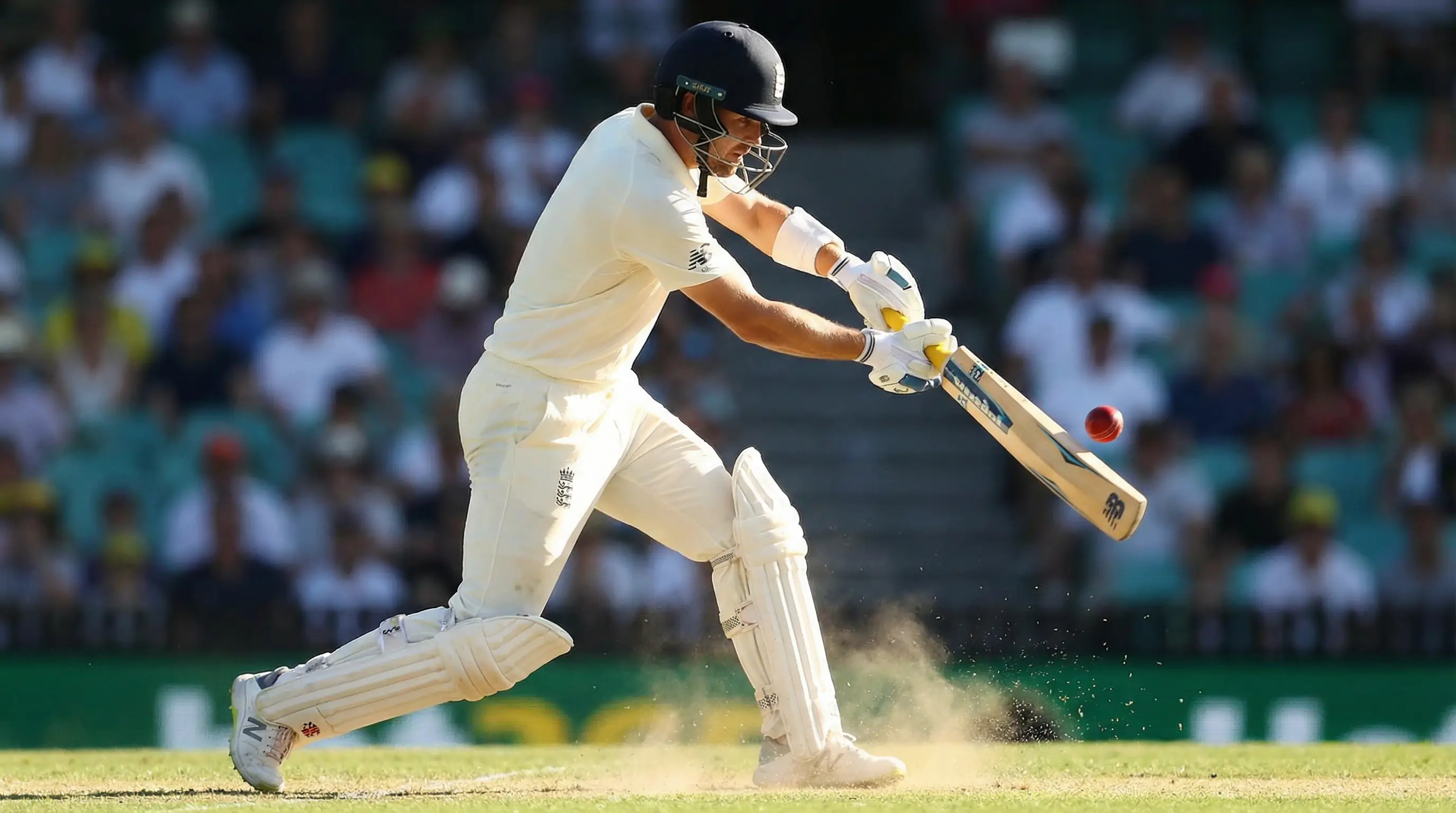
Proposition bets — props — are the side dishes of the cricket betting menu. While the match winner and totals markets form the main course, props offer bets on specific events within the match that may or may not relate to the final result. Will a specific batsman score a half-century? Will a bowler take a hat-trick? Will there be a run out in the first innings? Will the first ball of the match be a wide? These questions range from the analytically rigorous to the deliberately absurd, and the prop market caters to both ends.
What makes props interesting for serious bettors is not the novelty but the pricing. Because prop markets attract lower volume than the primary markets, they are less efficiently priced. The bookmaker spends the most analytical effort on the match winner and totals markets, where the money is. Prop markets are often set by secondary models or by adjusting template odds, which means they are more likely to contain pricing errors that an informed bettor can exploit.
The flip side is that props are harder to analyse because the outcomes are narrower, the sample sizes are smaller, and the variance is higher. A bet on whether a specific batsman will score a century has a very low hit rate — even elite batsmen score centuries in only 5-10% of their innings. But if the odds imply a 3% chance and your analysis suggests 7%, the bet has positive expected value despite losing far more often than it wins. Props require a tolerance for losing streaks and a firm understanding of expected value over long sample sizes.
See also top batsman and bowler markets.
Player Milestone Props: Fifties, Centuries, and Five-Wicket Hauls
The most common cricket prop bets are player milestone markets: will Batsman X score 50 or more runs? Will Bowler Y take three or more wickets? These markets are straightforward in concept but surprisingly complex in analysis, because the probability of reaching a milestone depends on multiple interacting factors.
For batting milestones, the starting point is the batsman’s historical conversion rate — how often they convert a start (reaching 20 or 30 runs) into a fifty, and how often they convert a fifty into a hundred. These conversion rates vary significantly between players and are relatively stable over time. A batsman with a high conversion rate — someone who rarely gives away his wicket once set — is more likely to reach milestones than a batsman with the same average but a lower conversion rate.
Conditions matter for milestones in a specific way. On flat pitches where batting is easy, more batsmen reach 30 or 40, but the probability of any one batsman converting to a fifty or hundred does not increase proportionately, because more batsmen are competing for runs and the finite number of deliveries is shared. On difficult pitches where most batsmen struggle, the few who survive the early phase have a disproportionately high probability of going big, because they face more deliveries as wickets fall at the other end. This counterintuitive dynamic means that backing a specialist on a tough pitch to score a fifty can sometimes offer better value than the same bet on a flat road.
Bowling milestone props — three or more wickets, five-wicket hauls — are even more volatile than batting props because wicket-taking is a higher-variance activity. A bowler can bowl superbly and finish with 1/30, or bowl moderately and finish with 4/35 thanks to some fortunate catches. The statistical indicator that best predicts bowling milestones is not the economy rate or the average but the “balls per wicket” metric — how many deliveries, on average, it takes the bowler to take each wicket. A bowler who takes a wicket every 20 balls in T20 cricket has a meaningfully higher probability of reaching three wickets in a four-over spell than one who takes a wicket every 35 balls.
First-Ball and First-Over Props
The first ball and first over of a cricket innings are popular prop markets because they resolve instantly — there is no waiting around for the outcome. Will the first ball be a dot ball? A wide? A boundary? Will the first over produce more or less than a set number of runs? These micro-props are essentially short-term prediction games, and they have a specific analytical framework.
The first ball of a cricket innings is a dot ball approximately 70% of the time across all formats. This means the “dot ball on the first delivery” prop is almost always a short-priced favourite, and the value, if it exists, is typically on the other side — the run-scoring or boundary outcome. But the probability shifts with the specific bowler and batsman combination. An aggressive opening batsman facing a bowler who regularly strays in line will produce a first-ball run more often than a cautious opener facing a disciplined seamer.
First-over props on total runs are driven by the same factors but over a six-ball sample. The average first over in T20 cricket produces roughly five to six runs, but the variance is enormous — anything from a maiden (zero runs) to fifteen or more is possible. The bookmaker sets the over/under line for the first over at a number that reflects this average, typically around 5.5 or 6.5 runs. The analytical edge comes from assessing the specific bowler-batsman matchup: if the opening bowler has a first-over economy rate well below the format average, the under on the first-over runs line may be mispriced.
Tournament-Specific and Novelty Props
Major ICC events and franchise leagues generate a wave of tournament-wide prop markets that go beyond individual matches. These include: tournament top run-scorer, tournament top wicket-taker, most sixes in the tournament, highest individual score, and whether a specific record will be broken. These long-range props are appealing because they run across the entire competition and provide a sustained rooting interest, but they require a different analytical approach than match-level props.
Tournament top run-scorer is the most popular long-range prop. The key input is opportunity — specifically, how many matches a player’s team is likely to play. Players on teams expected to reach the knockout stages face more innings than players on teams likely to be eliminated in the group phase. This creates a structural advantage for players on strong teams that the odds do not always fully reflect. A batsman on a semi-final contender might bat in seven or eight innings, while a batsman on a weak team might bat in only three or four. Even if the weaker team’s batsman is individually superior, the opportunity gap can be decisive.
Tournament top wicket-taker follows the same opportunity logic. Bowlers on teams that play more matches take more wickets. Additionally, bowlers on winning teams tend to bowl their full allocation more often, because winning teams defend totals (requiring full bowling spells) more frequently than losing teams (whose bowlers may not complete their overs if the match is lost while chasing). This secondary opportunity effect further advantages bowlers on strong teams.
Novelty props — such as whether a specific unusual event will occur during the tournament — are generally not analytically tractable. Will there be a tied match? Will a batsman score a double century? Will someone take a hat-trick? These events are too rare and too dependent on specific match circumstances to price with any accuracy. The bookmaker sets the odds with a large margin to compensate for the pricing uncertainty, and finding value in these markets requires either a very strong contrarian view or accepting that the bet is entertainment rather than investment.
The Discipline Required for Prop Betting
Prop betting is seductive because it offers action on almost everything. Every delivery, every over, every innings generates new prop markets, and the temptation to bet on all of them is powerful. This is where discipline matters more than analysis. A prop bettor who places thirty bets per match is not betting — they are paying the bookmaker’s margin thirty times over. Even with an edge on a few of those bets, the cumulative margin paid on the non-edge bets will erode the profits.
The disciplined approach to prop betting is to identify a small number of prop markets where your analysis gives you a genuine edge and to ignore everything else. If you are skilled at evaluating player milestone probabilities, focus on the fifty and hundred props and leave the first-ball and novelty markets alone. If your strength is bowling analysis, focus on the wicket-taking props and skip the batting milestones. Specialisation in prop betting is not a limitation — it is the mechanism that allows you to develop the depth of knowledge needed to consistently find mispriced odds.
Staking on props should be conservative relative to your bankroll. Because prop outcomes are binary and often low-probability, the variance is higher than in match winner or totals betting. A standard bet size of 1% of your bankroll per prop — roughly half of what you might stake on a match winner bet — accounts for this variance while still allowing meaningful profits when your selections hit.
Props Are a Craft, Not a Gamble
The difference between a prop bettor who profits and one who does not is the same difference that separates a craftsman from a hobbyist: precision, selectivity, and an honest assessment of where your knowledge is strong and where it is not. The prop markets offer a vast surface area of betting opportunities, but only a fraction of that surface contains genuine value. Finding that fraction requires specific knowledge — of individual players, of conditions, of statistical probabilities — that most bettors do not have. If you have it, the props market is one of the most rewarding corners of cricket betting. If you do not, it is one of the most expensive.
Cricket prop bets at live cricket betting.
