

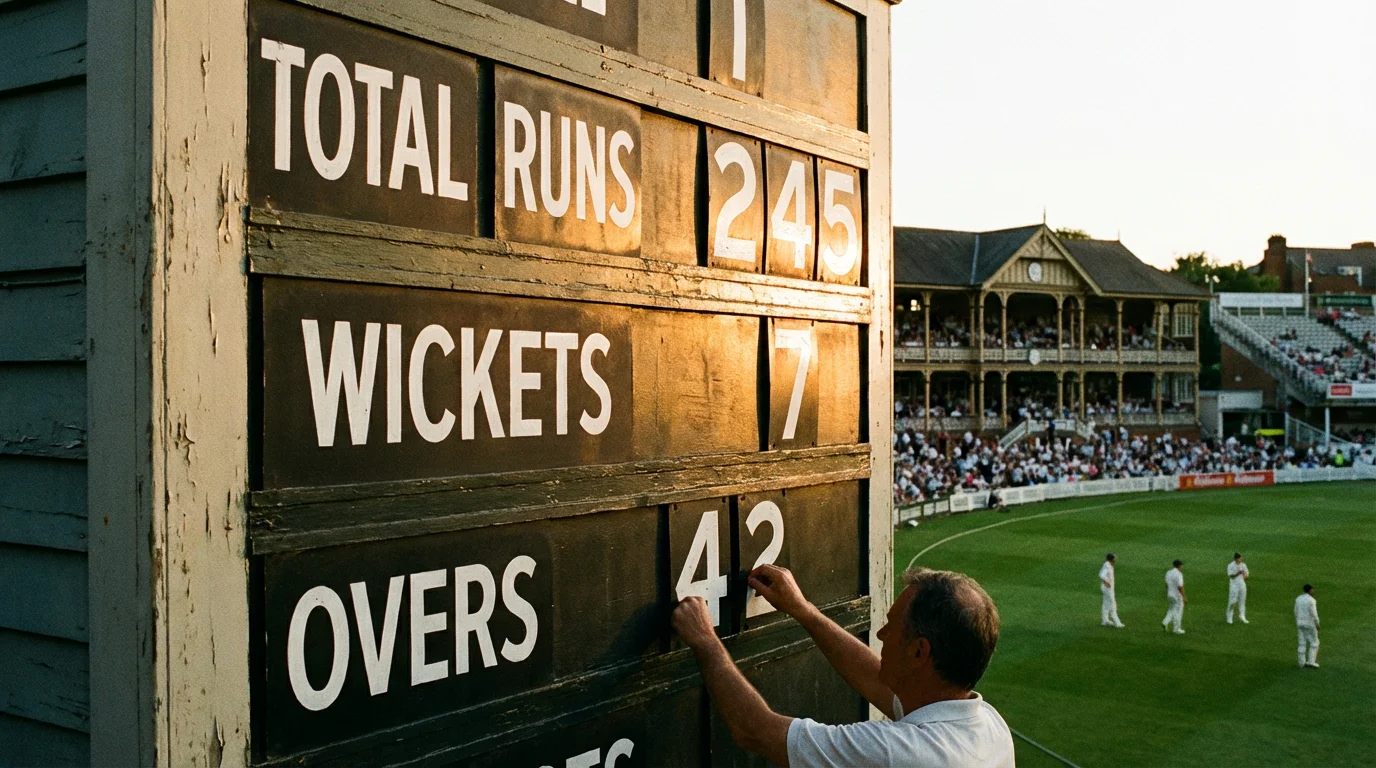
Spread betting in cricket is a different animal from fixed-odds betting. With a fixed-odds bet, you know your maximum profit and maximum loss before the match starts. You back a selection at a given price, and the outcome is binary — win or lose, by a set amount. Spread betting throws that simplicity out the window. Your profit or loss scales with the magnitude of the outcome, which means a good prediction pays more than a fixed-odds equivalent, and a bad one can hurt far more than losing your stake.
This fundamental difference makes spread betting simultaneously more exciting and more dangerous than traditional cricket betting. It attracts bettors who want more exposure to their analysis — the ones who believe not just that a team will score a lot of runs but that the final total will be significantly higher than the bookmaker expects. It also punishes overconfidence ruthlessly, because there is no predefined cap on losses unless you set one.
This guide explains how cricket spread betting works, covers the most common spread markets in the sport, and provides strategies for managing the unique risks the format introduces.
See also handicap betting in cricket.
How a Cricket Spread Works
A spread betting firm sets a range — the “spread” — around a particular outcome. For total match runs in a T20, the spread might be quoted as 310-320. If you think the total will be higher than 320, you “buy” at 320. If you think it will be lower than 310, you “sell” at 310. Your profit or loss is calculated by multiplying the difference between the actual outcome and your buy/sell price by your stake per point.
Suppose you buy total runs at 320 for 10 units per point. The match produces 345 total runs. The result is 345 minus 320, multiplied by 10, which gives you a profit of 250 units. But if the match produces only 290 runs, the result is 320 minus 290, multiplied by 10 — a loss of 300 units. The same bet, the same stake, and the outcome swings from a healthy profit to a substantial loss depending on how far the actual result deviates from the spread.
This mechanic creates a payoff profile that is entirely different from fixed odds. With fixed odds, your downside is always limited to your stake. With spread betting, your downside is theoretically unlimited — or at least limited only by the maximum possible outcome. If you sell total runs at 310 and the teams produce 400, you lose 90 points times your stake per point. If you buy at 320 and the teams combine for 150 in a rain-shortened match, you lose 170 points times your stake. This asymmetry is the defining feature of spread betting and the reason it demands a more cautious approach to staking.
Common Cricket Spread Markets
Cricket spread betting extends well beyond total match runs. The range of markets available is broad, and each carries its own dynamics and risk profile.
Team runs spreads quote a range for each team’s individual innings total. In an ODI, the first-innings spread might be 260-270. This market is useful when you have a view on one team’s performance but not the other’s. If you believe the batting side will collapse against a strong bowling attack, selling their runs at 260 isolates that thesis without requiring a view on the second innings.
Individual batsman runs spreads set a range for a specific player’s score. A star opener might be quoted at 32-36 in a T20. Buying at 36 means you profit for every run he scores above 36 and lose for every run he scores below. This market is highly volatile because individual batting scores in cricket are enormously variable — a batsman who averages 40 might score 0 in one match and 120 in the next. The standard deviation of individual batting scores is almost as large as the mean, which makes batsman runs spreads one of the riskiest markets in spread betting.
Wickets spreads quote a range for the total wickets in a match. In a T20, this might be 12-13. Buying wickets means you expect more dismissals than the spread implies. Selling means you expect a batting-dominated match with fewer wickets. This market tends to be less volatile than runs spreads because the range of possible wicket outcomes is narrower — a T20 can produce between 0 and 20 wickets, compared to a runs range of roughly 100 to 500.
Performance indices are composite markets that assign points based on multiple contributions. A batsman might earn one point per run, 15 points for a catch, and 20 points for a six. A bowler might earn 20 points per wicket and 5 points per maiden. The spread is set on a player’s total performance index score. These markets reward all-round contributions and tend to be heavily influenced by whether the player’s team bats or bowls first.
Risk Management: The Non-Negotiable Skill
If there is one message that matters more than any other in spread betting, it is this: manage your downside before you think about your upside. The variable-loss nature of spread betting means that a single catastrophic trade can wipe out weeks or months of careful profits. Staking discipline in spread betting is not just advisable — it is existential.
The first rule is to stake conservatively relative to your bankroll. In fixed-odds betting, a 2-3% per-bet allocation is standard. In spread betting, the equivalent is staking at a level where the maximum realistic loss on any single trade does not exceed 2-3% of your bankroll. Since losses in spread betting are proportional to the distance between the outcome and your entry price, you need to estimate the worst-case outcome and size your stake accordingly.
For a total runs spread in a T20, the maximum realistic deviation from the spread is roughly 100-150 points. If the spread is 310-320 and you buy at 320, the worst realistic outcome is around 150 total runs in a rain-affected or collapse-driven match — a deviation of 170 points. If your bankroll is 10,000 units, a 2% maximum loss is 200 units, which means your stake per point should be no more than approximately 1.2 units. This conservative calculation is the foundation of sustainable spread betting.
The second rule is to use stop-losses when they are available. Most spread betting platforms offer the option to set a stop-loss that automatically closes your position if the loss reaches a predefined level. Setting a stop-loss at twice the spread width — so if the spread is 10 points wide, your stop-loss is set 20 points from your entry — limits your downside while still giving the trade room to develop. Not every platform offers stop-losses on cricket markets, but where they are available, using them is non-negotiable.
Strategies for Cricket Spread Betting
The most effective spread betting strategies in cricket exploit situations where the actual outcome is likely to deviate significantly from the spread in one direction — not by a little, but by a lot. In spread betting, small deviations produce small profits that barely justify the risk. Large deviations produce the profits that make spread betting worthwhile.
One reliable strategy is to sell runs on surfaces that favour bowlers when the market has set the spread based on venue averages that include matches on different surfaces. If a traditionally flat ground has been freshened up with extra grass — something you can learn from pitch reports and pre-match analysis — the spread may be anchored too high. Selling in this scenario gives you exposure to a collapse that the market has not priced for. If the collapse materialises, the deviation is large and the profit is substantial.
The reverse strategy — buying runs on batting paradises — works when the spread is set conservatively. Certain grounds and certain match contexts produce extreme high-scoring matches. The Chinnaswamy in Bangalore during an IPL night match on a flat pitch with short boundaries and a dew factor is a scenario where 400-plus combined runs are plausible. If the spread is set at 340-350, buying at 350 gives you upside that is both likely and potentially large.
For individual batsman spreads, the best strategy is to focus on high-floor players — batsmen who rarely fail completely. A batsman with a high median score but a low frequency of single-digit failures is a better buy candidate than a higher-averaging batsman who is more volatile. The reason is that in spread betting, you are exposed to the full downside of a failure. A batsman who averages 40 but scores 0-10 in 30% of his innings is dangerous to buy because the bad outcomes are both frequent and costly. A batsman who averages 35 but almost always scores at least 15 is safer, even though his upside is lower.
When Spread Betting Makes Sense — and When It Does Not
Spread betting is not for every bettor and not for every situation. It makes sense when you have a strong directional view with high confidence — when your analysis tells you that the outcome will deviate significantly from the spread, not just slightly. It makes sense when you have the bankroll to absorb the variable losses without it affecting your staking on other markets. And it makes sense when the specific market offers a spread that you believe is clearly mispriced.
It does not make sense as a substitute for fixed-odds betting on outcomes where your edge is small. If you think a team has a 55% chance of winning — a genuine but modest edge — fixed-odds betting captures that edge with controlled risk. Spread betting on the same match amplifies both the edge and the risk, and the amplified risk may not be justified by the amplified potential reward.
The Spread Bettor’s Paradox
Spread betting rewards conviction and punishes indecision. The profits come from large deviations, which require strong views. But strong views carry the risk of large losses when they are wrong. The bettor who succeeds at cricket spread betting is the one who holds strong views selectively — not on every match, not on every market, but on the specific situations where their analysis gives them a clear and significant edge. On everything else, they abstain. The discipline to do nothing when the edge is absent is harder than the discipline to act when it is present, and it is the single skill that separates profitable spread bettors from the ones who discover, painfully, that unlimited downside is not a theoretical concept.
