

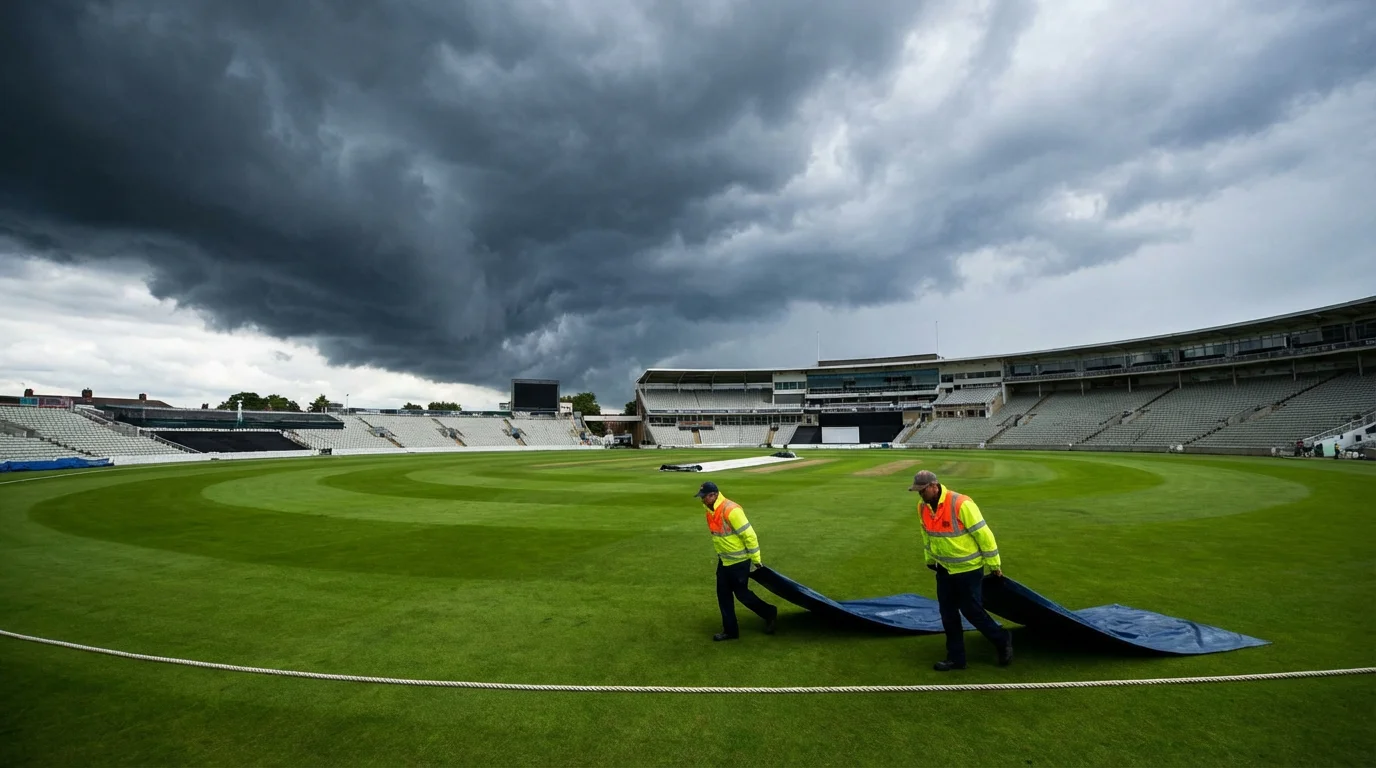
Cricket is the only major sport where the weather can fundamentally alter the rules mid-match. Rain does not just delay play — it can reduce the number of overs, trigger the Duckworth-Lewis-Stern method to recalculate targets, and turn a comfortable winning position into a losing one without a ball being bowled. Dew can transform a bowling-friendly evening into a batting carnival. Overcast skies can swing a ball that was going straight under sunshine. No other sport gives the atmosphere this much power over the outcome, and no other sport offers bettors this many weather-related edges.
The problem is that most bettors treat weather as a binary: will it rain or will it not? This crude approach misses the layers of opportunity that weather creates. The timing of rain matters more than the fact of rain. The intensity of dew matters more than its mere presence. The interaction between cloud cover and the ball’s behaviour is a variable that moves odds in real time and rewards the bettor who understands the mechanism rather than just the headline.
This guide covers the three major weather factors in cricket betting — rain and DLS adjustments, dew, and overhead conditions — with a focus on how each creates specific, actionable opportunities in live markets.
See also how pitch conditions affect odds.
Rain Delays and Overs Reductions: The Disruption Factor
Rain is the most visible weather influence on cricket and the one that moves the odds most dramatically. When rain arrives during a limited-overs match, play is suspended, overs are reduced for one or both teams, and the target is recalculated using the DLS method. Each of these consequences creates a distinct betting implication.
The first implication is about timing. Rain that arrives during the first innings reduces the total overs available for both teams, which mechanically lowers the expected total runs in the match. If you hold an “over” bet on the match total and rain is forecast for the first innings, your position is at risk even before the interruption occurs. Conversely, rain during the second innings creates a different dynamic: the DLS method often sets a revised target that is harder to chase than the original, because it accounts for the resources (overs and wickets) already used. Teams batting second under DLS pressure frequently lose not because they bat badly but because the revised calculation penalises early conservatism.
The second implication is about the DLS method itself. DLS is a mathematical model, and like all models, it has tendencies. The method tends to favour the team batting first in rain-affected matches, particularly when rain arrives during the second innings. This is because DLS preserves the first innings total as a baseline and adjusts the second-innings target upward relative to the remaining resources. Teams chasing under DLS often face a required rate that is higher than it would have been without the interruption. Knowing this systematic bias allows bettors to position themselves before the rain arrives.
The practical approach is to check the weather forecast before any limited-overs match and identify windows where rain is likely. If rain is forecast for the second half of the match, the team batting first gains a structural DLS advantage. If rain is forecast for the first half, both teams face reduced overs and the match becomes more volatile. In both cases, the match winner odds should adjust — and the question is whether they adjust fast enough and far enough.
The Dew Factor: Cricket’s Invisible Hand
Dew is less dramatic than rain but arguably more consistent as a betting factor. In day-night matches — particularly in the subcontinent and the Middle East — moisture settles on the outfield and the ball as the temperature drops in the evening. This makes the ball slippery, which affects bowlers far more than batsmen. Slower balls lose their grip, cutters do not cut, and the ball skids on to the bat rather than gripping the surface. The result is a systematic advantage for the team batting second.
The dew effect is not uniform across all venues. Grounds in coastal cities — Mumbai, Chennai, Colombo — tend to experience heavier dew than inland venues. Grounds in arid climates experience less. The time of year also matters: dew is heavier during the cooler months when the temperature differential between day and evening is larger. These variations mean that the dew factor should be assessed venue by venue and month by month, not applied as a blanket rule.
For the match winner market, the dew factor interacts directly with the toss. In venues with heavy dew, the captain who wins the toss almost always chooses to bowl first, putting his team in position to bat under dew-friendly conditions. When this happens, the post-toss odds adjustment for the chasing team is usually justified. But the size of the adjustment varies, and this is where the edge lives. At venues where dew historically adds 15-25 runs to second-innings totals, the chasing team’s advantage is substantial and the market often prices it accurately. At venues where the dew effect is moderate — adding perhaps 5-10 runs — the market sometimes overprices the advantage, creating value on the team batting first.
The over/under runs market is where the dew factor shows up most reliably. If you know that a particular venue adds 20 runs to second-innings totals due to dew, and the bookmaker has set the second-innings line based on first-innings performance without fully accounting for dew, the over on the second-innings total is a recurring value bet. This is not a guaranteed win on any single match — variance still applies — but across a season of day-night matches at dew-affected venues, the edge compounds.
One subtlety worth noting: dew does not arrive all at once. It builds gradually as the evening progresses, which means its impact on the second innings is not uniform. The early overs of the second innings may still play similarly to the first innings. The effect intensifies as the match continues, with the final ten to fifteen overs seeing the most significant dew impact. For live bettors, this means the second-innings over/under market becomes more attractive as the match progresses, because the remaining overs are the ones most affected by dew.
Overhead Conditions: Cloud Cover and Swing
Beyond rain and dew, the general overhead conditions — cloud cover, humidity, temperature — influence how the ball behaves in the air. This effect is most pronounced in countries where swing bowling is a primary weapon: England, New Zealand, and to a lesser extent South Africa and Australia.
Under overcast skies, the cricket ball swings more. The precise physics are still debated — some attribute it to the Coanda effect and the interaction between the ball’s seam and humid air, others point to turbulence differentials — but the empirical evidence is overwhelming. Fast bowlers who swing the ball are significantly more dangerous under cloud cover than under clear skies. The ball moves laterally in the air before pitching, which gives the batsman less time to adjust and increases the probability of edges and LBW dismissals.
For the match winner market, overhead conditions matter most in Test cricket and ODIs, where the ball has time to swing before the lacquer wears off. In T20 cricket, the effect is less pronounced because the innings is shorter and the ball is replaced more frequently. But even in T20s, the first few overs under heavy cloud cover can produce a cluster of wickets that shifts the odds dramatically. If you are watching a T20 match and the skies darken during the powerplay, the probability of early wickets rises — and the next wicket market and session wickets market should reflect this.
For live betting, the key is to watch the sky as much as the pitch. When clouds roll in during a session, the ball often starts swinging within a few overs. If you can see this happening before the odds fully adjust, there is a window of value on the bowling side in the match winner market, or on the over in the wickets market. Conversely, when the clouds break and sunshine returns, the swing diminishes and batting becomes easier. The transition from cloudy to clear — or clear to cloudy — is the trigger, not the static state.
Weather in Test Cricket: Five Days of Variables
Test cricket’s five-day duration makes it uniquely susceptible to weather influence. Rain can wash out entire days, fundamentally changing the match’s trajectory. Temperature shifts between days can alter pitch behaviour. Wind direction affects swing on some grounds more than others. The cumulative weather across five days is a variable that no other cricket format shares.
The most important weather factor in Test cricket is lost time. A Test match requires roughly fifteen sessions to produce a result. If three or more sessions are lost to rain, the probability of a draw increases substantially. For bettors in the three-way match winner market, tracking weather forecasts across all five days is essential. A match where rain is forecast on day three should be priced differently from one with clear skies throughout — and the draw should be shorter.
The live betting opportunity in Test cricket weather comes from forecast updates. Weather forecasts change, sometimes significantly, as a match progresses. A day-two forecast that initially showed clear weather for days four and five might be revised to show rain on day four. When this happens, the draw price should shorten, but the market does not always respond immediately. The bettor who is checking weather updates during session breaks and acting on revised forecasts before the market adjusts has a legitimate informational edge.
Wind is an underappreciated weather factor in Test cricket, particularly at specific grounds. At Lord’s in London, the 2.5-metre slope of the ground creates pronounced seam movement and angle advantages for bowlers, with the gradient affecting the ball’s behaviour differently at each end. At Wellington’s Basin Reserve, one of the windiest Test grounds in the world, the breeze affects both swing and the trajectory of the ball in the air. These ground-specific wind effects are well known to experienced cricket followers but rarely discussed in betting analysis.
Forecasting the Forecast
The bettor’s relationship with weather should not end at checking whether it will rain. It should extend to understanding how each weather element interacts with the specific conditions of the match: the venue, the format, the teams, and the time of day. A bettor who reads a forecast and sees “60% chance of rain in the afternoon” should be asking how much rain, at what point in the innings, and what the DLS implications would be if it arrives. A bettor who sees “dew expected” should know whether the venue historically produces heavy dew or light dew, and whether the bowling side has the variations to cope with a wet ball.
Weather is not a side variable in cricket betting. It is woven into the fabric of every match, every session, and every over. The bettors who treat it as background noise will occasionally be surprised by a rain-affected result or a dew-dominated chase. The bettors who treat it as a core analytical input will find that the sky — quite literally — keeps offering them edges.
How weather affects cricket betting at live cricket betting.
