

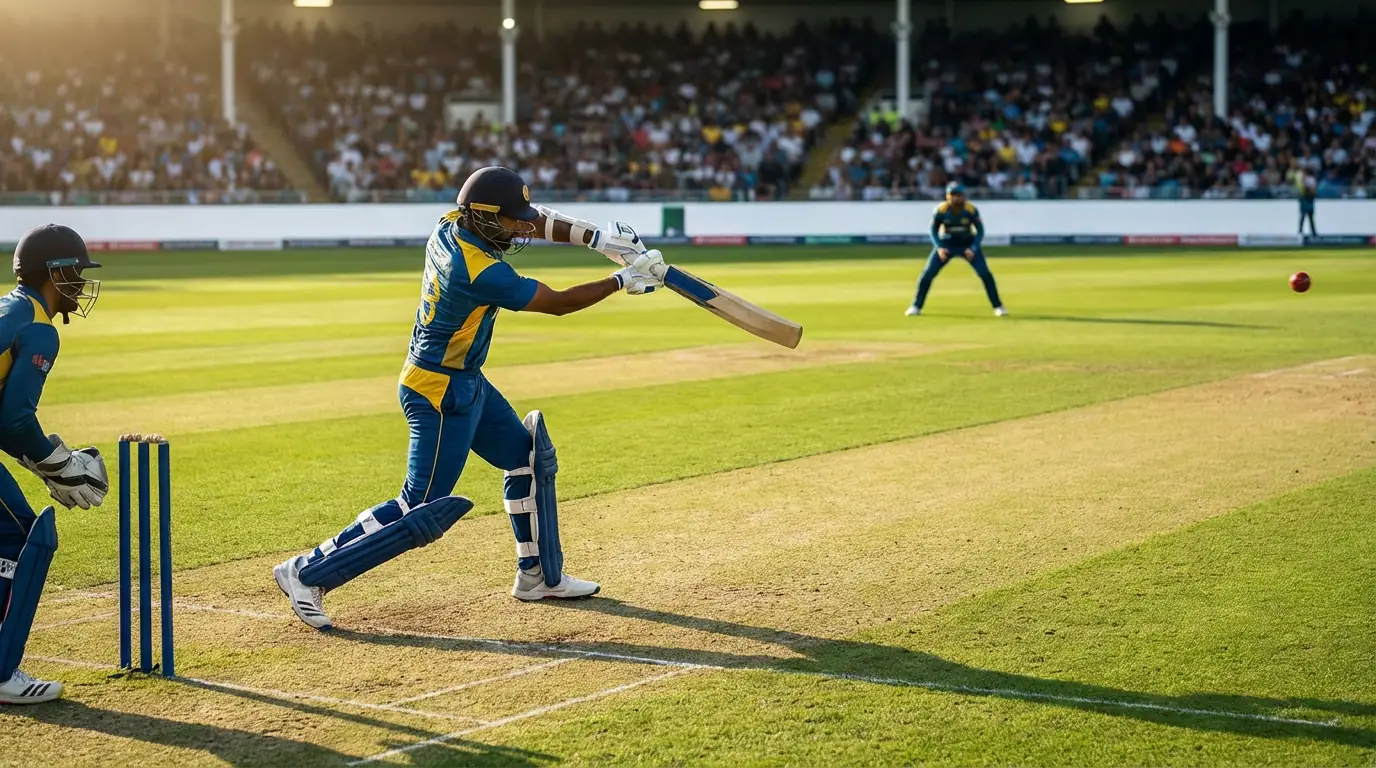
One Day International cricket occupies an awkward middle ground in the betting world. It is not as explosive as T20, so it does not attract the volume of casual in-play bets. It is not as long as Test cricket, so it does not offer the slow-burn analytical depth that appeals to patient bettors. For many, it falls into a no-man’s land — too slow for action junkies, too fast for purists. And that perception is exactly why ODI betting offers some of the most overlooked value in cricket.
Because ODI markets receive less attention from the betting public, the odds are set by sharper models but tested by fewer eyes. The casual bettor skips the ODI in favour of the evening T20. The professional bettor focuses on the higher-volume Test or franchise league markets. What remains is a format with well-structured markets, identifiable patterns, and a thinner crowd of informed competitors. For the bettor willing to do the work, that is an invitation.
This guide covers the structural phases of an ODI innings, the in-play markets that offer the best value, and the strategic approaches that are specific to the fifty-over format.
See also live betting on Test cricket.
The Three Phases of an ODI Innings
An ODI innings is not a uniform fifty overs. It breaks naturally into three phases, each with its own scoring dynamics, tactical patterns, and betting implications. Understanding these phases is the foundation of ODI in-play betting.
The first powerplay — overs one through ten — operates under fielding restrictions that force the bowling side to keep most fielders inside the inner ring. This creates run-scoring opportunity but also risk, because batsmen who play aggressively against the new ball on an uncovered field can be caught in the deep. The scoring rate in the first powerplay of ODIs typically ranges from 5.0 to 6.5 per over, depending on conditions and the batting team’s approach.
For the over/under market, the first-powerplay total is a micro-market that offers genuine analytical value. The inputs are specific and measurable: the opening pair’s recent form, the new-ball bowling attack’s ability to move the ball, the pitch’s early-over behaviour, and the team’s strategic intent. A team that has been aggressive in recent powerplays — scoring at 6.5 or more — is likely to maintain that approach unless conditions demand otherwise. If the bookmaker has set the powerplay line based on broader averages rather than team-specific trends, there is value to be found.
The middle overs — eleven through forty — are the longest and most strategically complex phase. Fielding restrictions ease, spinners operate in tandem, and the batting side must balance run accumulation with wicket preservation. This is where ODI cricket diverges most sharply from T20: the middle overs in a T20 last nine overs, while in an ODI they last thirty. That additional length creates room for sustained pressure, gradual momentum shifts, and the kind of tactical chess that rewards patient analytical betting.
The scoring rate in the middle overs typically drops to 4.5-5.5 per over, and wickets come in clusters rather than at regular intervals. A partnership of 80 for the fourth wicket can be followed by a collapse of 4/20 when a bowling change disrupts the set batsmen. For the match winner market, the middle overs are where the live odds are most likely to be mispriced, because the gradual accumulation of pressure is harder for automated models to price than discrete events like wickets and boundaries.
The Death Overs: Where ODIs Borrow From T20
Overs forty-one through fifty in an ODI function almost identically to the death overs in a T20. Batsmen accelerate hard, bowlers attempt to execute under pressure, and the scoring rate typically jumps to 7.0-9.0 per over. The tactical approaches are borrowed directly from T20 cricket: yorkers, slower balls, wide outside off, and batsmen clearing the front leg to hit over the top.
For bettors, the death overs of an ODI first innings present the same opportunity as T20 death overs: the market reacts to recent boundaries with optimism that may not be sustained. If the batting side has hit twenty runs off the forty-fourth over, the in-play odds and the over/under line adjust upward. But if the next bowler is a death-over specialist with an economy rate below seven in this phase, the adjustment may be excessive.
The key difference from T20 is that ODI death overs come after forty overs of batting, which means the batsmen at the crease are often tired, the ball is older and softer, and the pitch may have deteriorated. A batsman who has been in for eighty balls and is approaching a hundred may prioritise his milestone over aggressive scoring, which temporarily suppresses the run rate. These human factors are not easily captured by models, but they are visible to the bettor who is watching the match rather than just tracking the scoreboard.
One practical approach for ODI death-over betting is to watch the batting team’s behaviour in overs 36-40. If they are accelerating early — pushing the run rate above six before the traditional death phase begins — it signals intent to post a big total and the batting depth to support it. If they are still consolidating at 4.5 per over in over 38, the death-over explosion is likely to be more modest. This pre-death signal is a useful predictor for the innings total market and the over/under line.
Chasing in ODIs: Target Awareness and Par Scores
The second innings of an ODI is defined by target awareness — the chasing team knows exactly what they need, and every over is measured against the required rate. This creates a more structured analytical framework for bettors than the first innings, because the outcome space narrows with every ball.
The concept of a “par score” is essential for second-innings ODI betting. The par score at any given point in the chase is the number of runs the chasing team should have scored, at their current wicket position, to be on track. If a team chasing 280 is 120/2 after 25 overs, they need 160 from 150 balls with eight wickets in hand — a required rate of 6.4, which is very manageable. They are ahead of par. The match winner odds should favour the chasing side, and if the market is slow to reflect this, there is value.
The par score calculation shifts dramatically with wickets. The same team at 120/5 after 25 overs faces a completely different proposition. The remaining batsmen are less reliable, the required rate is the same but the margin for error is gone, and a single additional wicket could trigger a collapse. The market typically adjusts for wickets, but the adjustment is often linear — each wicket receives roughly equal weight — when in reality the impact is non-linear. The fifth wicket is far more damaging than the second, because it exposes the tail and eliminates the recovery options. When the market applies linear wicket adjustments to a non-linear reality, there is value on the bowling side.
Historical data on ODI chases shows a clear pattern: teams that are ahead of par at the thirty-over mark win approximately 65-70% of the time, regardless of the target. Teams that are behind par at the thirty-over mark win less than 35%. The thirty-over checkpoint is a reliable in-play assessment point, and the match winner odds at that stage should reflect these historical win rates. When they do not — when a team that is clearly behind par is still priced at close to 50% — there is an exploitable discrepancy.
The Middle-Overs Squeeze: ODI Betting’s Hidden Gem
The middle overs — roughly overs 15-35 — are where ODI betting offers its most distinctive value opportunities. This phase is long enough for sustained patterns to develop but slow-paced enough for the market to become complacent. The scoring rate drops, the drama decreases, and casual bettors tune out. But the underlying probabilities are shifting with every over, and the bettor who stays engaged can identify value that the market overlooks.
The middle-overs squeeze happens when a bowling side applies sustained pressure through tight lines, disciplined spin, and aggressive field placements. The run rate drops below five per over, dot balls accumulate, and the batting side falls behind par without a single dramatic event occurring. The match winner odds drift slowly toward the bowling side, but the drift often lags the reality because the model reacts to events rather than to the absence of scoring.
If you can see the squeeze developing — dot-ball percentages rising, the batsmen’s body language becoming anxious, the field tightening — you can bet on the bowling side before the odds fully reflect the pressure. This is a classic example of observational advantage: the information is available to anyone watching the match, but most bettors are not watching the middle overs of an ODI with the same intensity as the powerplay or the death overs.
The two-new-ball rule in ODIs adds another dimension to middle-overs analysis. Each team bowls with a ball that was new at the start of each end, which means the ball stays harder and newer for longer than in old ODI rules. This gives fast bowlers more assistance throughout the innings and reduces the advantage spinners used to have during the middle overs with a worn ball. The implication for bettors is that pace-heavy attacks are more competitive in the middle overs under current rules than historical data from older eras might suggest.
The Format Nobody Watches Is the Format That Pays
ODI cricket does not generate the social media excitement of a T20 final or the reverent analysis of an Ashes Test. It sits quietly in the calendar, producing matches that most bettors glance at and move past. That indifference is the opportunity. The markets are well-structured, the patterns are identifiable, and the competition for value is thinner than in any other cricket format. The bettor who pays attention to the fifty-over game — who understands its three-phase structure, its chasing dynamics, and its middle-overs subtleties — is operating in a space where the crowd is small and the edges are real. In betting, as in cricket, the unglamorous innings often produces the best returns.
