

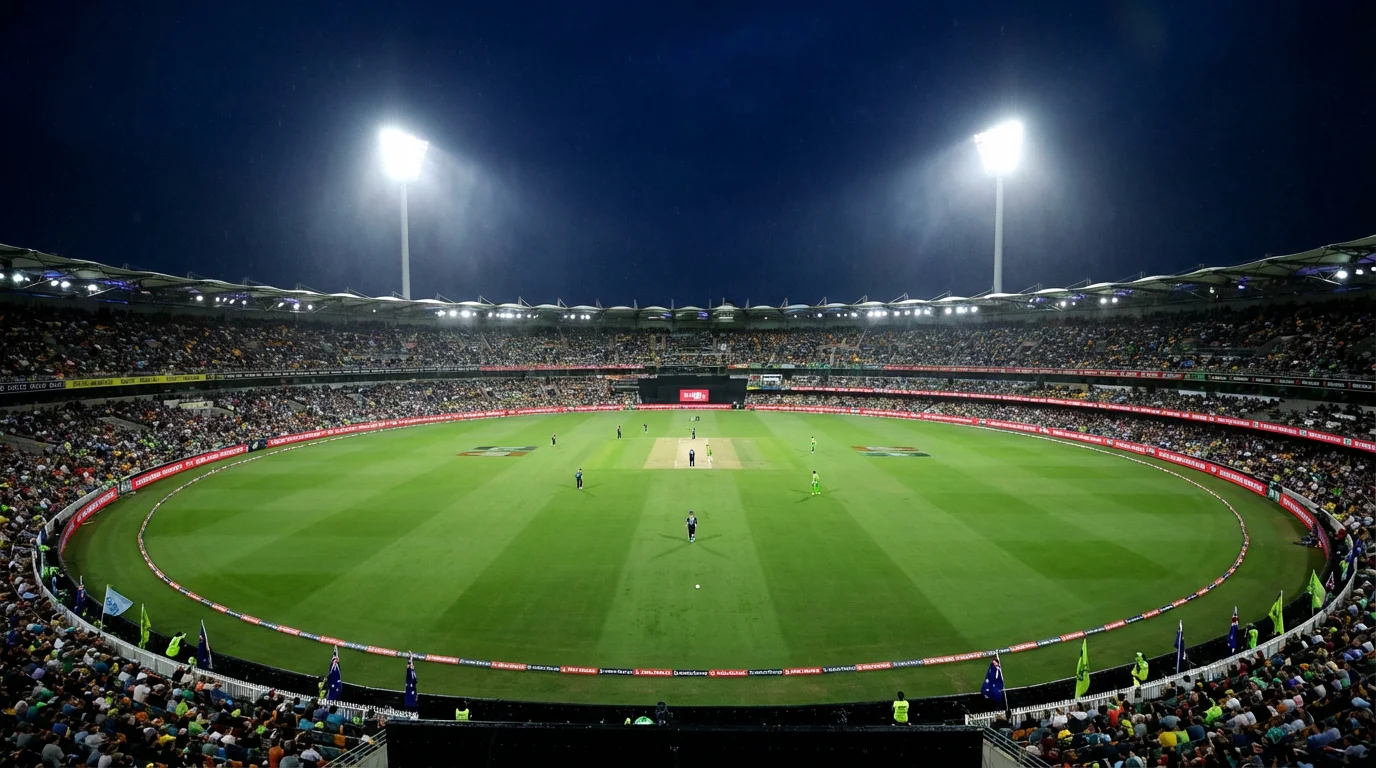
The Big Bash League occupies a curious position in the cricket betting landscape. It is one of the oldest domestic T20 leagues in the world, played across iconic Australian grounds, and broadcast to a global audience. Yet it flies under the radar compared to the IPL, the Caribbean Premier League, or the SA20. For bettors, this relative obscurity is an advantage. The BBL markets are well-structured and liquid, but they attract less sharp money than the IPL, which means pricing inefficiencies last longer and the casual-to-professional bettor ratio skews in your favour.
What makes the BBL analytically interesting is the combination of Australian conditions — big grounds, fast outfields, hard and bouncy pitches — with a fixture density that produces fatigue, squad rotation, and form fluctuations. The league runs for roughly two months over the Australian summer, overlapping with international commitments that pull top players in and out of squads. This constant squad flux is a headache for bookmakers and an opportunity for bettors who track team news more closely than the models can update.
This guide covers the BBL-specific factors that matter for betting — venue analysis, squad dynamics, and the in-play patterns that Australian conditions create.
See also the ICC T20 World Cup guide.
Venue Analysis: Australia’s Ground Diversity
The BBL is played across venues that vary more dramatically in their characteristics than almost any other domestic T20 league. The Melbourne Cricket Ground, with its massive 75-84 metre boundaries, produces a completely different game than the Bellerive Oval in Hobart, where the boundaries are among the shortest in world cricket. This variation is the single most important input for BBL betting, and ignoring it is the most common mistake bettors make.
At the MCG, sixes are rare and the game is won through ground strokes, running between the wickets, and bowling that restricts boundaries. First-innings totals at the MCG tend to be lower than the BBL average, and the under on total runs is a structurally sound bet at this venue. The top batsman market at the MCG favours technically correct accumulators over power hitters — the batsman who runs well and finds gaps is more valuable than the one who tries to clear the enormous boundary.
At smaller grounds — Bellerive, Manuka Oval in Canberra, the Gabba in Brisbane — the dynamic shifts toward power hitting. Sixes are more frequent, totals are higher, and the boundaries market becomes the primary analytical focus. The bookmaker sets lines for each venue individually, but the adjustments are based on historical averages that may not account for the specific teams playing on a given night. A team loaded with power hitters at Bellerive will produce a different boundary count than a team built around spin and defensive batting at the same venue.
The drop-in pitches used at several BBL venues — including the MCG, Docklands, and Optus Stadium in Perth — add another layer of variation. Drop-in pitches are prepared off-site and inserted into the ground before the match, which means they lack the organic connection to the local soil and climate that traditional pitches have. Drop-in surfaces tend to be flatter, slower, and more predictable than natural pitches, which favours batsmen and suppresses the seam movement that can make traditional Australian pitches dangerous. If you are betting on wickets or method of dismissal at a drop-in venue, adjust your expectations away from the seam-friendly patterns you might see at grounds with traditional pitches.
Squad Dynamics: The BBL’s Unique Roster Challenge
The BBL has a specific roster issue that no other major T20 league shares to the same degree: international player availability is limited and inconsistent. Unlike the IPL, which commands exclusive availability from its contracted players, the BBL often loses its international stars to national duty partway through the tournament. An overseas player who is dominant in the first half of the league might be called up for a bilateral series and replaced by a significantly weaker alternative.
This mid-tournament roster churn creates betting opportunities that are straightforward to exploit but require diligence to track. When a franchise loses its best overseas batsman or its lead overseas bowler, the team’s win probability drops — but the market adjustment is not always immediate. If the replacement player’s quality is significantly lower and the market has not yet fully repriced the team, there is value on the opposition.
The reverse scenario also creates value. When a high-quality international player joins a BBL franchise mid-tournament — perhaps returning from national duty or arriving as a late signing — the team improves overnight. The first match after the arrival of a genuine star is often mispriced because the bookmaker’s model updates based on the squad change, but casual bettors may not have noticed the roster move.
Tracking BBL squad announcements, injury updates, and international call-ups is less glamorous than reading pitch reports or analysing statistics, but it provides a more reliable edge. The information is publicly available — franchise social media accounts announce it, cricket news outlets report it — but the gap between the information becoming public and the market fully pricing it can be hours or even a full day. In that gap, value lives.
In-Play Patterns Under Australian Conditions
Australian T20 conditions create specific in-play dynamics that differ from subcontinent or English conditions. The pace and bounce of Australian pitches mean that fast bowlers are more dangerous throughout the innings, not just in the powerplay. The larger grounds reward good fielding and punish mistimed shots that would clear the rope at smaller venues. And the consistent outfields — hard, dry, and fast — ensure that ground shots travel to the boundary quickly, inflating the fours count even when sixes are scarce.
For the match winner market, the key Australian in-play dynamic is the “pace factor.” On pitches with genuine pace and bounce — the Gabba, Perth, and to a lesser extent Adelaide — fast bowlers who bowl north of 140 kilometres per hour can be devastating at any phase of the innings. Unlike subcontinent conditions, where pace loses its threat as the ball softens and the pitch slows, Australian surfaces maintain their pace throughout the twenty overs. A team with two genuinely fast bowlers has a sustained advantage on these surfaces, and if the market has not fully accounted for the pace matchup, there is value on the bowling side.
The BBL’s evening scheduling also introduces a temperature dynamic that is unique to the Australian summer. Matches played during heat waves — temperatures above 38 degrees Celsius — produce different cricket than matches in milder conditions. Batting becomes harder when the heat radiates off the pitch and the ball comes through faster. Bowlers tire more quickly, leading to variation in pace that can either produce wickets or gift runs. The practical implication for live betting is that heat-affected matches tend to produce more volatile scoring patterns, which means the under/over line should have wider confidence intervals. If the market is set at normal volatility levels during a heat wave match, the extreme outcomes — very high or very low totals — may be underpriced.
Dew is less of a factor in the BBL than in the IPL, because Australian evening conditions are typically drier than subcontinent conditions. However, certain venues — particularly in Melbourne and Sydney during humid periods — do experience light dew in the later stages of evening matches. The effect is milder than in India, adding perhaps five to ten runs to second-innings totals rather than fifteen to twenty-five. The market occasionally overprices the dew factor at Australian venues by applying subcontinent-calibrated adjustments, which creates value on the team batting first.
The BBL Playoff System and Late-Season Dynamics
The BBL’s playoff structure — which has undergone several format changes in recent years — creates specific late-season betting dynamics. As the group stage nears its end, teams are either fighting for qualification, coasting with a position secured, or mathematically eliminated. Each of these positions influences how the team approaches individual matches, and the match winner odds should reflect this.
Teams fighting for a playoff spot play with higher intensity and urgency. Their best players are always in the lineup, their captains take fewer risks with bowling changes, and their batting orders are stable. The consistency of their approach makes them more predictable — and predictability is a bettor’s friend, because it reduces the number of variables in the analysis.
Teams already qualified may rest key players, experiment with batting orders, or give development players opportunities. These matches are harder to predict from a match winner perspective, but the totals market can still offer value. A weakened lineup typically produces lower totals, and if the bookmaker has set the over/under based on the team’s full-strength scoring rates, the under may be mispriced.
Eliminated teams are the most dangerous for bettors. Freed from the pressure of results, these teams sometimes produce their most entertaining and aggressive cricket. Young players with nothing to lose swing hard, and the results are volatile — blowout wins or spectacular collapses. Betting on eliminated BBL teams requires caution, because the predictability that underpins most analytical approaches breaks down when the team itself has abandoned its standard approach.
The playoff matches themselves — the Qualifier, the Eliminator, and the Final — produce tighter, lower-scoring cricket than the group stage average. The pressure of elimination cricket, combined with the fact that the best teams are the ones still playing, means that bowling units tighten and batting becomes more cautious in the early overs. The under on match totals in BBL playoff matches has been a historically profitable bet, and the pattern is consistent enough to be worth incorporating into your playoff betting approach.
The League That Rewards the Early Riser
The BBL schedule is built for the Australian summer audience, which means matches are played in the late afternoon and evening Australian time. For bettors in Europe or the Americas, this often means early mornings or late nights. The inconvenience filters out a portion of the casual betting public, which thins the market and allows pricing inefficiencies to persist longer than they would in a prime-time IPL match. The bettor who is willing to set an alarm, do the pre-match research, and engage with the BBL on Australian time is operating in a less competitive market than almost any other major T20 league offers. Sometimes the edge is not in the analysis itself but in the willingness to show up when others do not.
