

Handicap betting exists to solve a problem that cricket creates more often than most sports: mismatches. When India play a newly promoted associate nation, or when the top franchise in the IPL meets the bottom side in the league, the match winner market offers odds so short on the favourite that the bet is practically worthless. Backing the favourite at 1.05 risks a meaningful stake for a negligible return, and backing the underdog at 12.00 is a wager on a near-miracle. Neither option appeals to the analytical bettor who wants a competitive decision.
The handicap market solves this by applying an artificial advantage or disadvantage to one team before the match begins. Instead of asking “who will win?”, it asks “will the favourite win by enough to cover the handicap?” This reframes the lopsided contest as a genuine analytical question, with odds closer to evens on both sides. Handicap betting does not change the match — it changes the lens through which you evaluate it, and that new lens creates opportunities that the straight match winner market cannot.
Cricket handicaps come in two primary forms: run handicaps and, less commonly, wicket handicaps. Each works differently, each suits different formats and match types, and each requires a specific analytical approach. This guide explains both, walks through the mechanics with concrete examples, and identifies the situations where handicap betting offers the clearest value.
See also cricket spread betting.
Run Handicaps: The Core Market
A run handicap assigns a positive or negative run adjustment to one team’s final score. The favourite receives a negative handicap (they start with runs deducted), and the underdog receives a positive handicap (they start with runs added). The adjusted scores are then compared to determine the handicap winner.
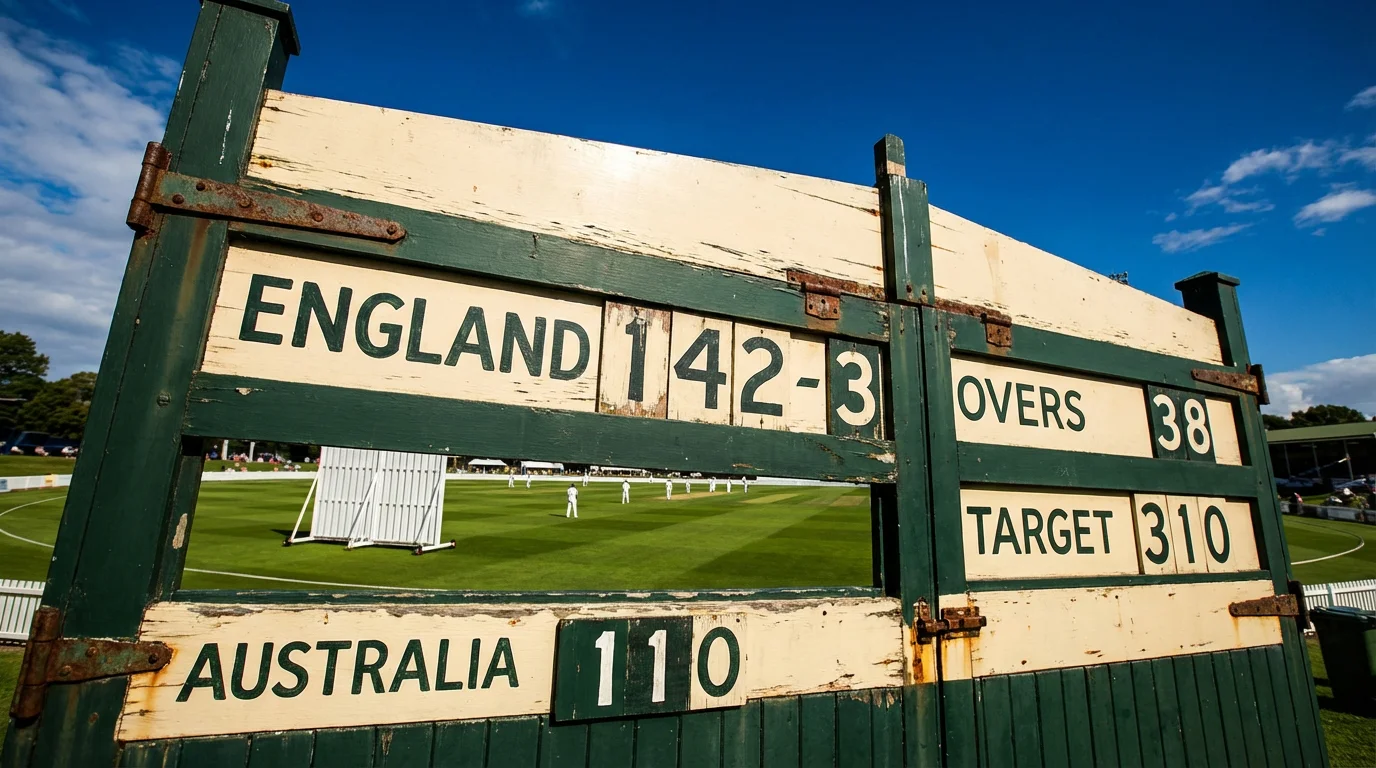
Here is a concrete example. Australia are heavy favourites in a T20 against an associate nation. The bookmaker sets a run handicap of -25.5 for Australia. This means that 25.5 runs are subtracted from Australia’s final total before comparing it to the opposition’s total. If Australia score 185 and the associate nation scores 140, the adjusted scores are Australia 159.5 versus the associate’s 140. Australia still cover the handicap and the bet on Australia wins. But if Australia score 165 and the associate scores 145, the adjusted scores are 139.5 versus 145. The associate covers the handicap, and the bet on the underdog wins — even though Australia won the actual match by twenty runs.
The half-run in the handicap (the .5) eliminates the possibility of a tie on the handicap. This is standard practice and means every handicap bet produces a winner and a loser — there is no push result, which simplifies the mathematics.
Run handicaps are available across all three formats but are most popular in T20 and ODI cricket, where both teams bat once and the final totals are directly comparable. In Test cricket, run handicaps are less common because the match structure — two innings per side, the possibility of draws, and the variable number of overs bowled — makes the final run margin less meaningful as a betting instrument.
How to Analyse Run Handicaps
Analysing a run handicap requires a different mindset from analysing the match winner market. The question is not which team will win but by how much. This shifts the analytical focus from probability to margin — and margin in cricket is driven by different factors than outright victory.
The first factor is the quality gap between the two teams. In matches between closely ranked sides, the expected margin is small — typically five to fifteen runs in a T20 and ten to thirty runs in an ODI. In matches between teams with a large quality gap, the expected margin is larger but also more variable. A strong team can choose to cruise to victory with a conservative chase, winning by two wickets with overs to spare, or they can bat aggressively and win by sixty runs. The margin depends on the winning team’s approach, not just their quality — and the approach is influenced by the match context.
Target awareness in the second innings is the most important variable for run handicap betting. When the chasing team knows the target, they calibrate their batting effort to the required total. A team chasing 140 will not attempt to score 200 — they will reach 141 at whatever pace feels comfortable and stop. This behavioural ceiling on the margin means that run handicaps in the second innings are partly determined by how far below the target the chasing team is willing to go with wickets in hand.
The implication for handicap betting is that the margin of victory in cricket is often smaller than the quality gap between the teams would suggest. A team that is 30 runs better on paper might win by only 6 wickets or 5 overs to spare, producing a run margin of ten or fifteen rather than thirty. Bookmakers account for this compression, but the degree of compression varies by match context — and when the bookmaker underestimates it, value appears on the underdog’s handicap line.
First-innings totals are easier to project for handicap purposes than second-innings margins, because the batting team does not have a target to calibrate against. In the first innings, teams bat as aggressively as conditions allow, and the final total is a more direct reflection of team quality and conditions. If you are analysing a run handicap and the favourite is batting first, your projection should focus on whether they will post a total large enough that the underdog’s batting cannot get within the handicap margin — even with the artificial head start.
Wicket Handicaps: An Alternative Framing
Wicket handicaps are less widely offered than run handicaps but appear on some platforms, particularly for T20 and ODI matches. Instead of adjusting the run totals, a wicket handicap adjusts the number of wickets lost. If the favourite has a wicket handicap of -1.5, they must win the match while losing fewer wickets than the opposition minus 1.5. In practice, this means the favourite must win by a convincing margin in terms of batting resources — winning with plenty of wickets in hand.
The analytical framework for wicket handicaps is distinct from run handicaps. Run handicaps are influenced by batting aggression, target calibration, and scoring intent. Wicket handicaps are influenced by batting depth, the vulnerability of the middle and lower order, and the bowling attack’s ability to take wickets even when the match is already decided.
Consider a match where the favourite chases down a modest target in fifteen overs, winning by eight wickets. That is a comprehensive victory in cricketing terms and would comfortably cover most wicket handicaps. But if the same team chases the same target in twenty overs, losing five wickets along the way, the victory is equally convincing in the match result but much narrower in wicket terms. The wicket handicap captures a different dimension of dominance than the run handicap — it measures the quality of the win, not just its size.
Wicket handicaps are most useful in matches where one team has significantly stronger batting depth than the other. A team with quality batsmen down to number eight will lose fewer wickets in most matches than a team whose batting effectively ends at number six. This structural depth advantage shows up consistently in wicket handicap markets and is often underpriced because the bookmaker focuses on overall team quality rather than depth specifically.
Player Run Handicaps: The Individual Market
Some platforms offer individual player handicaps — a head-to-head market where two batsmen from opposing teams are compared, with a run handicap applied to equalise the contest. For example, Batsman A (the better player) might have a handicap of -15.5, meaning his score must exceed Batsman B’s score by at least 16 runs for the handicap bet on Batsman A to win.
Player run handicaps are analytically appealing because they isolate individual performance. The factors that drive the outcome are specific: each batsman’s current form, their record at the venue, their matchup against the opposition’s bowling, and their batting position.
Batting position is particularly important for player handicaps. An opener who bats through the innings faces more deliveries than a middle-order batsman who arrives at the crease in the fifteenth over. If the handicap does not fully account for the positional difference, there is value on the opener’s side.
The volatility of player handicaps is higher than team handicaps because individual batting scores vary more than team totals. This variance means that player handicap bets should be staked conservatively, and the edge needs to be larger to justify the bet.
Live Handicap Betting: When the Line Moves
Handicap markets are available in-play, and the handicap line adjusts as the match progresses. In a T20, the pre-match handicap might be -15.5 for the favourite. After the first innings, if the favourite has posted a large total, the second-innings handicap line might shift to -25.5, reflecting the dominant first-innings performance. Conversely, if the first innings produced a below-par total, the handicap might shrink to -8.5.
The live handicap is most valuable at the innings break — the transition between the first and second innings in limited-overs cricket. At this point, you have the complete first-innings data and can make a far more informed assessment of whether the chasing team will get within the handicap margin. The pre-match handicap was set without this information. The live handicap incorporates it but may not weight it correctly, particularly if the first innings deviated significantly from expectations.
If the first innings produced a total thirty runs below the expected score because of a pitch that is doing more than anticipated, the live handicap should account for the pitch conditions affecting the second innings as well. But the adjustment is not always symmetrical — the bookmaker may shorten the handicap based on the first-innings total without fully reflecting that the same difficult pitch will also suppress the second-innings total. This asymmetry is the most reliable source of value in live handicap betting.
When Handicap Betting Makes Strategic Sense
Handicap betting is not a replacement for match winner betting. It is a complement that makes specific types of matches analytically interesting and bettable. The situations where handicap betting offers the most value are predictable and identifiable.
Mismatches — matches where one team is vastly superior — are the obvious use case. The match winner market is dead in these contests, but the handicap market poses a genuine question: can the underdog compete within the margin? Answering this question requires a specific analysis of the underdog’s strengths, the venue, and the conditions, which means the handicap market rewards deeper research than the match winner market does in lopsided contests.
Matches with predictable margins are another good opportunity. When two teams have played recently in similar conditions and produced consistent margins, the handicap line should cluster around that range. If the bookmaker sets the line outside the established pattern, there is empirical evidence to support a handicap bet.
The handicap market is also useful for hedging match winner positions. If you have backed the favourite pre-match and the match is going as expected, taking the underdog on the live handicap provides a partial hedge that secures profit regardless of the final margin.
The Margin Tells Its Own Story
Cricket is a sport of margins. A match decided by one run, one wicket, or one over to spare tells a different story than a match decided by a hundred runs and eight sessions. The handicap market takes these margins seriously, transforming them from afterthoughts into the primary betting variable. For the bettor who enjoys the analytical challenge of predicting not just who wins but how they win, handicap betting provides a depth of engagement that the match winner market cannot. The margin is no longer a footnote — it is the entire question, and answering it well is a skill that pays.
