

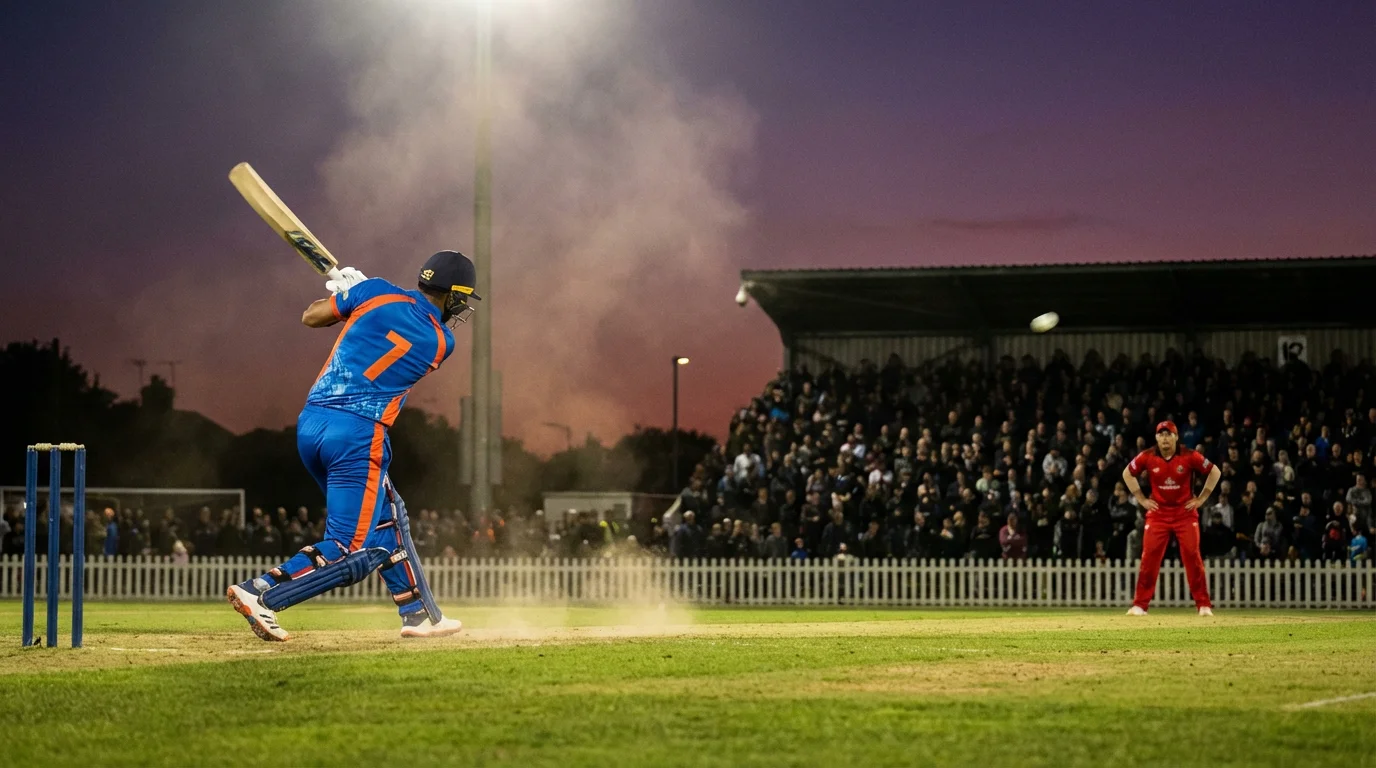
Boundaries are the currency of excitement in cricket. A four threaded through the covers, a six launched into the stands — these are the moments that make highlight reels and fill stadiums. But for bettors, boundaries are more than spectacle. They are a quantifiable, analysable outcome driven by specific and measurable factors: ground dimensions, batting lineups, bowling types, pitch pace, and match context. The boundaries market — betting on the total number of fours and sixes in a match or innings — is one of cricket betting’s most condition-dependent markets, and that dependency is exactly what creates value.
Most casual bettors engage with boundaries markets on gut feeling. They see a small ground and a big-hitting lineup and take the over on sixes. That instinct is not wrong directionally, but it is imprecise in a way that the market can exploit. The bookmaker has the same information, and the line is set accordingly. The edge comes from understanding the interaction between the factors that drive boundaries — not just identifying them individually but understanding how they compound or cancel each other out in specific match contexts.
This article breaks down the fours and sixes markets separately, explains what drives each, and shows how ground dimensions, batting profiles, and bowling strategies create the specific conditions where value appears.
See also over/under runs betting.
The Fours Market: Ground Running and Outfield Speed
Fours in cricket are overwhelmingly ground shots — the ball beaten through or past the fielders and running to the boundary rope. Aerial fours exist but are a small minority. This means the fours market is driven by different factors than the sixes market, and the two should be analysed separately even when they appear as a combined “total boundaries” market.
The primary driver of fours is outfield speed. A fast outfield — dry, firm, and closely mown — allows the ball to race to the boundary from shots that would be stopped in the deep on a slow, damp outfield. Grounds in Australia, South Africa, and the subcontinent during dry seasons tend to have the fastest outfields. English grounds in early season, where the grass is thicker and the moisture level higher, produce slower outfields that reduce the fours count even when the batting quality is high.
Ground dimensions are the second major factor. Fours are more frequent at grounds with shorter straight boundaries and larger square boundaries. This sounds counterintuitive — should not shorter boundaries in any direction increase fours? — but the reality is that straight shots are the most common scoring shots in cricket, and a shorter straight boundary means more straight drives and pushes reach the rope. Square boundaries that are longer mean more balls hit into the deep are fielded before reaching the edge, but straight boundaries dominate the fours count because most batting technique is oriented toward hitting in the V between mid-on and mid-off.
Batting lineups also matter, but in a nuanced way. Teams with technically correct top-order batsmen who play proper cricket shots — drives, cuts, pulls — tend to produce more fours than teams built around power hitters who favour aerial shots. A classical opener who spends sixty balls accumulating through the gaps will hit more fours than a slogger who hits three sixes and gets out. For the fours-specific market, the batting lineup’s technical profile matters more than its raw power.
The bowling attack contributes too. Pace bowlers who bowl full and outside off stump are more likely to be driven through the covers for four than bowlers who bang the ball in short. Spin bowlers who flight the ball invite the batsman to use his feet and drive, increasing the fours probability. Conversely, bowlers who operate at the body or bowl slower-ball variations reduce the fours count by restricting the batsman’s ability to free his arms.
The Sixes Market: Power, Dimensions, and Phase
Sixes are a fundamentally different kind of boundary. They require the ball to clear the rope on the full, which means they are almost entirely about power, loft, and ground dimensions. The factors that drive the sixes market overlap with but are distinct from those that drive fours.
Ground dimensions are the dominant factor for sixes. A ground with short boundaries in all directions — Sharjah, Chinnaswamy, Johannesburg — produces more sixes per match than a ground with large boundaries like the MCG or Eden Gardens. The difference can be dramatic: some IPL venues average eight to twelve sixes per match, while others average four to six. If the bookmaker’s sixes line does not fully account for the specific ground’s dimensions, there is an immediate value opportunity.
Batting lineup composition is more important for sixes than for fours. Power hitters — the players who can clear the rope from a standing start — are concentrated in specific batting positions: the opening or number-three spot in T20 cricket, and the middle to lower order in ODIs. A team with three genuine six-hitters in its top six will produce more sixes than a team with one, even at the same venue. Checking the batting lineup for the number of recognised power hitters is a simple but effective pre-match analysis step.
Match phase is the third critical variable for sixes. In T20 cricket, the vast majority of sixes are hit in two phases: the powerplay, when fielding restrictions allow batsmen to loft with less risk of being caught in the deep, and the death overs, when batsmen swing aggressively regardless of field placement. The middle overs produce significantly fewer sixes because the field is spread, the bowling is tighter, and the batting approach shifts toward rotation. For the sixes market, this means that the length of the death-over phase and the quality of the death-over batsmen are disproportionately important. A team that has its power hitters available for the final five overs will produce more sixes than a team whose big hitters were dismissed in the middle overs.
The bowling type also influences six-hitting probability. Slow bowlers who overpitch or bowl at a predictable pace are the easiest to hit for six. Fast bowlers who hit the blockhole with yorkers are the hardest. Wrist spinners who vary their pace and trajectory occupy a middle ground — they can be hit for six when they err in length, but they also create more dismissal opportunities than finger spinners. For the sixes market, the matchup between the batting lineup’s power hitters and the bowling side’s death-over and spin options is the most granular and underused analytical input.
Combined Boundaries: When the Market Lumps Them Together
Many platforms offer a “total boundaries” market that combines fours and sixes into a single number. This simplification creates a specific analytical challenge: the factors that drive fours and sixes can move in opposite directions. A slow outfield on a small ground might suppress fours but encourage sixes, because batsmen compensate for the sluggish outfield by trying to clear the rope instead. Conversely, a fast outfield at a large ground might produce plenty of fours but few sixes, because the ball races to a distant boundary that is too far to clear on the full.
When analysing the combined boundaries market, the key is to estimate fours and sixes separately and then add them. If your analysis suggests 25 fours and 8 sixes in a T20 match, the combined total is 33 boundaries. If the bookmaker has set the line at 30.5, the over looks attractive. If the line is at 35.5, the under might be the play. This decomposition approach — breaking the combined market into its components — is more accurate than trying to estimate total boundaries directly, because it forces you to think about the distinct drivers of each type.
One recurring pattern in the combined boundaries market is that the bookmaker’s line tends to be slightly generous on the over in high-profile matches with strong batting lineups and small grounds. This is because the public bets the over in these situations — big names, big ground, big expectations — and the bookmaker sets the line to balance the action rather than reflect the true expected total. In less glamorous matches with weaker lineups or larger grounds, the under is often underbet and underpriced.
Live Betting on Boundaries: Phase-Specific Opportunities
The boundaries market offers specific live betting opportunities tied to the phase of the innings. During the powerplay, the fours rate is typically at its highest because fielding restrictions leave gaps in the field. If the first three overs of a T20 produce six fours, the market will extrapolate this rate forward, but the rate almost always declines once the powerplay ends and the field spreads. Selling boundaries or taking the under on the total after a boundary-heavy powerplay can offer value because the market has been anchored by the early rate.
During the death overs, the sixes rate spikes. If a match has been boundary-sparse through the middle overs, the boundaries total might look like it will fall under the line. But the death overs can add ten or more boundaries in the final five overs, especially if both teams have wickets in hand. Buying boundaries or taking the over during a quiet middle-overs phase — when the market has been lulled by the low boundary count — is the mirror image of the powerplay sell, and it is equally valid.
The transition between phases — from powerplay to middle overs, and from middle overs to death — is where the boundaries market is most likely to be mispriced, because the rate of boundaries per over changes abruptly and the market’s projection model may lag the shift. Recognising these transition points and positioning accordingly is a consistent live betting edge in the boundaries market.
Where the Rope Meets the Numbers
The boundaries market is one of the few cricket betting markets where the physical characteristics of the ground — measurable, objective, unchanging from match to match — are the dominant analytical input. You can look up boundary distances, check outfield conditions, review batting lineups, and estimate a boundaries total with more confidence than you can estimate a match winner or a top batsman. That analytical tractability is the market’s great advantage for systematic bettors. The ground does not lie, the dimensions do not change, and the relationship between short boundaries and six-hitting is as close to a law of nature as cricket betting offers. Build your analysis on the physical facts, adjust for the human variables, and let the numbers at the rope do the work.
